
Legal AI pilots, sharper questions, and why integrations are the next frontier
Piloting legal AI in Ireland? Ask the data questions early. Vizlegal on why sources, provenance, and integrations decide whether the answers can be trusted.
Many Irish practices are now evaluating legal AI (Harvey, Legora, Newcode.ai, Microsoft Copilot, and others), and there is real value in their promise. Drafting, review, and first-pass research are changing, and firms are right to run pilots and see for themselves.
Vizlegal is not a legal AI platform like those. We don't compete with them, and we don't pretend to. But something interesting has been happening as firms run these pilots: we're having parallel conversations that help shape them.
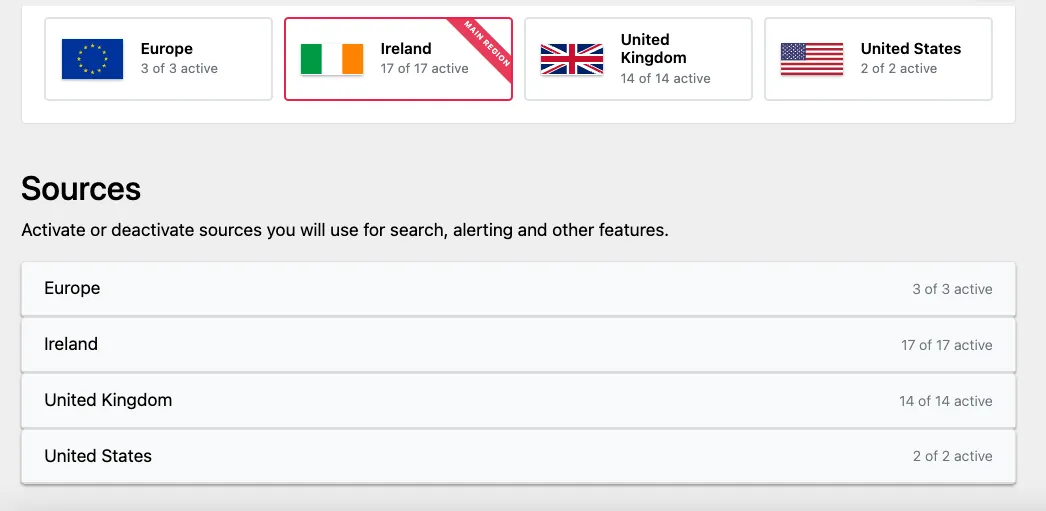
Why us? Because since 2019 we've been deep in the plumbing of Irish legal data: court judgments, High Court filings, listings, consolidated rules and practice directions, tribunal decisions, and litigation records. We know what these sources contain, where they're incomplete, how often they change, and what it takes to make them reliable enough for high-stakes legal research and litigation management. That understanding turns out to be exactly what firms need when they're deciding whether an AI platform's answers can be trusted on Irish matters.
So the pilot conversations get sharper. Instead of "does the demo look impressive?", firms start asking: what Irish sources does this actually draw on? How current are they? What happens when a practice direction changed three weeks ago? Where are the gaps on the matters that matter to us? Those are the questions that separate a good pilot from an expensive one.
The early evidence backs this up. A recent randomised controlled trial at the University of Minnesota Law School found that law students who used AI to synthesise legal materials didn't just work faster: they went on to reason better on later tasks, even without AI. Why? A strong initial synthesis lifts everything built on top of it. The lesson cuts both ways: AI's output is only as good as the sources underneath it. Good inputs compound, and so do bad ones.
The mosaic, and why partnerships matter
Here's the thing we've learned from working with clients across the professions: nobody runs their practice on one platform. It is custom and practice in every firm to have a number of technologies running side by side: a practice management system, a document management system, Outlook, research tools, and now AI platforms. That's not a transitional mess to be tidied up; it's simply what a working tech stack looks like, and it always has. The firms getting the most from technology aren't the ones that picked a single winner. They're the ones whose stack is integrated, whose tools talk to each other.
That's why we've always treated integration as a feature, not an afterthought. Our court calendar flows directly into Outlook. Our alerts arrive where litigators already work. The value of good legal data multiplies when it shows up inside existing workflows rather than behind another login.
Where integrations go next
The next phase is bigger. AI platforms are only as good as the data they can reach, and the industry is converging on open standards, protocols like MCP, that let AI systems plug into trusted, structured, and current data sources at the moment of need. The general-purpose AI layer and the authoritative data layer are becoming separate, composable things.
That's good news for firms. It means you won't have to choose between the AI platform you like and the Irish data you need. Structured, well-maintained sources (judgments, filings, listings, rules, and timelines) can be plugged into whichever AI tools a firm adopts. Vizlegal is built to be exactly that kind of source.
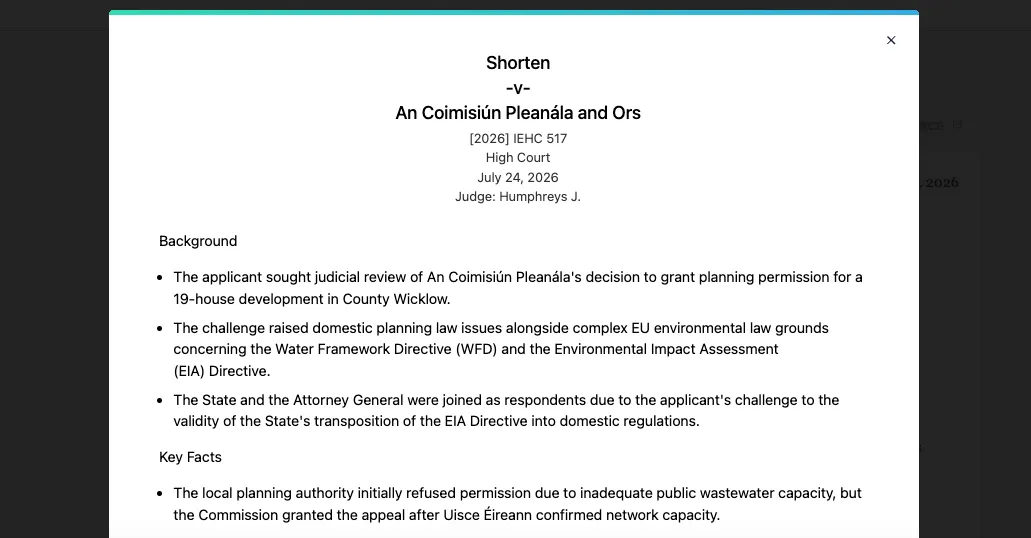
So if you're piloting legal AI right now, ask the data questions early. And if you'd like a second pair of eyes on the Irish data side of your evaluation, we're happy to talk. We've been thinking about little else since 2019.
Book a demo or get in touch at vizlegal.com/contact.